

Sri Lanka's National Fuel Pass: How QR Codes Ended a Fuel Crisis
In 2022, Sri Lanka used a QR code-based National Fuel Pass to end days-long fuel queues in just one week. Learn how the system works, what it achieved, and why governments worldwide are taking notice.
1. The Crisis That Sparked an Innovation
In mid-2022, Sri Lanka was on its knees. The country faced its worst economic crisis since independence — a collapse of foreign exchange reserves meant it could no longer import adequate quantities of fuel, bringing businesses, schools, hospitals, and food supply chains to a near standstill.
The human cost was visible on every street. Citizens queued for days just to receive rations of 20 liters. Frustration over black-market fuel prices spilled into public protests, and the breakdown of normal supply chains threatened every sector of the economy.
The government needed a solution — fast. What followed became one of the most closely studied examples of digital public infrastructure in modern crisis management.
2. What Is the National Fuel Pass?
Launched in July 2022, the National Fuel Pass (NFP) revolutionized fuel management across Sri Lanka. The system allowed individuals to secure a weekly fuel quota for their registered vehicles through verification by the Department of Motor Traffic, which assigned a unique QR code as a digital identifier for each vehicle.
The Ministry of Power and Energy introduced the system specifically to address the growing queues and increasingly unmanageable shortages at filling stations across the country.
The NFP is accessed through the official government portal at where vehicle owners complete an online registration process to receive their QR code — linked directly to the vehicle's registration details and storable on a mobile phone or as a printed copy.
3. How the QR Code System Works
The technology behind the system is elegant in its simplicity. The cross-sector project team chose to use citizens' mobile phones and QR codes for real-time fuel allocation and quota management, requiring direct connections to core government systems and an automated verification process. The extended team built a working solution in three weeks.
The National Fuel Pass was designed to integrate with the Lanka Interoperability Exchange — Sri Lanka's centralised data-exchange platform enabling seamless integration of government services. Vehicle details were verified through the Department of Motor Traffic's digital systems and registration records, ensuring each vehicle could only access its designated quota.
At the fuel station, the process is straightforward: the motorist presents their QR code on a mobile device or as a printed copy. The pump operator scans it, the system verifies the vehicle's remaining weekly quota in real time, and fuel is dispensed accordingly. No fuel is issued from any filling station without a valid QR code linked to a registered vehicle.
To further reduce congestion, Ceylon Petroleum Corporation implemented a number plate scheduling system alongside the QR code: vehicles with number plates ending in even digits access fuel on even-numbered days, and those ending in odd digits on odd-numbered days.
4. Weekly Fuel Quotas by Vehicle Type
Under the official government distribution plan, weekly allocations are structured as follows: motorcycles receive 5 liters, cars 15 liters, three-wheelers 15 liters, vans 40 liters, buses 60 liters, and motor lorries up to 200 liters. Jeeps and other land vehicles are allocated 25 liters, special-purpose vehicles 40 liters, and quadricycles 5 liters.
Fuel for private passenger transport buses is distributed separately through the Sri Lanka Transport Board to ensure continuity of public transport services. Vehicles engaged in essential services and critical sectors receive fuel under a special distribution program coordinated with relevant government institutions.
5. Results: What the Data Shows
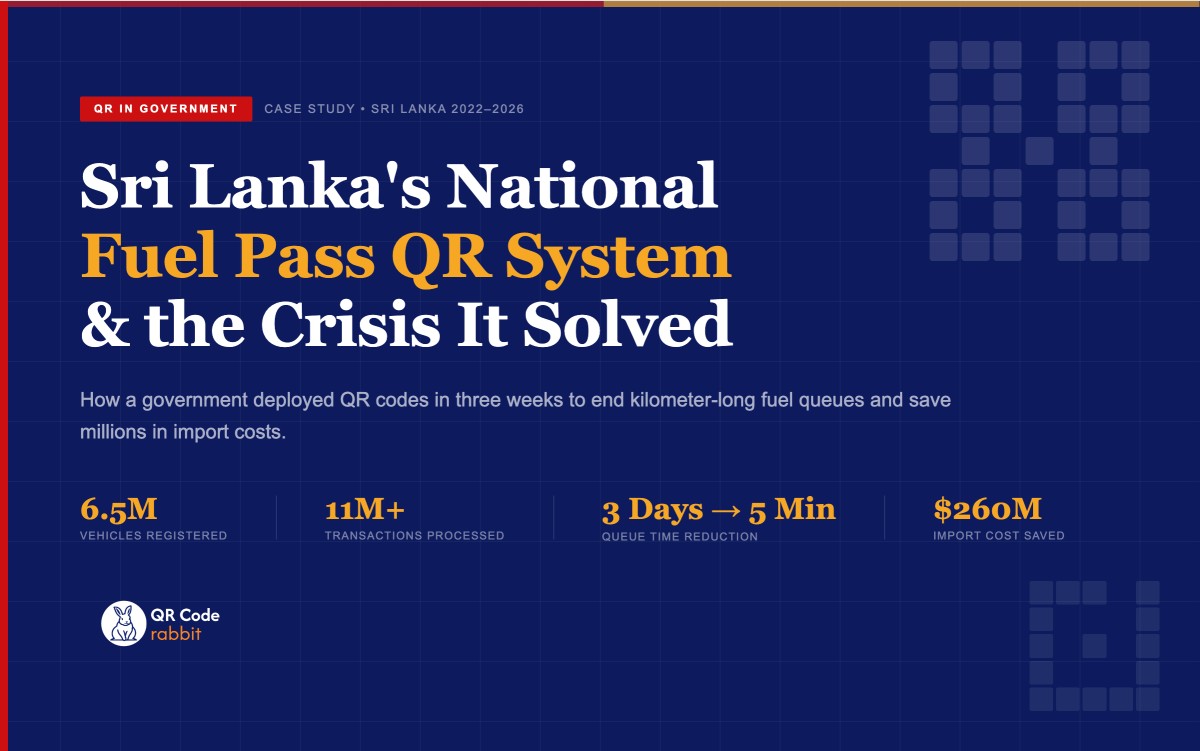
The impact was immediate and measurable. The National Fuel Pass attracted one million registrations on day one, quickly rising to 6.5 million out of a total of 8.25 million active vehicles in Sri Lanka. Within a month, 93 percent of fuel stations had adopted the system, processing more than 11 million transactions.
The most striking result was the collapse in queue times. In just one week, queues at fuel stations were reduced from up to three days — at the peak of the crisis — to just five minutes.
The economic impact was equally significant. At the height of the crisis, Sri Lanka's monthly fuel import bill had reached $500 million. The National Fuel Pass system, alongside broader economic and policy measures, contributed to reducing these costs to $240 million — a reduction of more than half.
The digital solution automatically linked transactions to drivers and vehicle registrations, which eliminated fraudulent transactions, prevented hoarding, and curtailed black-market activity — three of the core challenges that had made the crisis so damaging.
6. Challenges and Criticisms
No government digital programme of this scale launches without friction. At the time of its rollout, only 78 percent of vehicle-owning households in Sri Lanka owned a smartphone or internet-accessible device, raising concerns that a portion of the population could be excluded from the system entirely.
Technical issues also emerged. Common problems included QR codes appearing as blocked due to vehicle ownership transfers or mobile number changes, vehicles registered under leasing companies facing difficulty obtaining codes, and system errors during periods of peak traffic.
Newly imported vehicles presented a particular challenge. Sri Lanka recently relaxed restrictions on vehicle imports, leading to the arrival of thousands of newly registered vehicles that did not yet have a Fuel Pass registration — leaving those owners without immediate access to fuel under the reinstated system.
Despite these friction points, the scale and speed of adoption remains remarkable for a government digital project.
7. 2026: The System Returns
The National Fuel Pass was not a one-off emergency measure. The return of tighter fuel controls in 2026 came against the backdrop of renewed turbulence in global energy markets following conflict involving the United States, Israel, and Iran — disruptions that pushed global oil prices upward and complicated fuel supplies for a number of import-dependent economies, including Sri Lanka.
Sri Lanka's Ministry of Energy confirmed the system was reactivated following global fuel supply disruptions linked to the ongoing military situation in the Middle East, which affected international petroleum supply routes while domestic demand had increased significantly.
The government had been observing how other countries — including Pakistan, Bangladesh, and Thailand — were responding to similar challenges and considering comparable QR-based rationing measures.
The reactivation confirmed what many already suspected: the National Fuel Pass is now a permanent pillar of Sri Lanka's energy management infrastructure, not just a crisis workaround.
8. What This Means for QR Code Adoption Globally
The National Fuel Pass project has been recognised as a successful example of digital public infrastructure and a case study for other governments facing similar challenges. Because digital public infrastructure is, by design, based on open standards, Sri Lanka's approach offers valuable insights that other nations can study and adapt based on their unique requirements.
The project also demonstrates something broader: QR codes are no longer just a tool for marketing or contactless payments. In the right architecture, they become the backbone of equitable, transparent, and scalable resource distribution — even in conditions of national crisis.
9. How QR Code Rabbit Supports Businesses Inspired by This Innovation
Sri Lanka's Fuel Pass story is a masterclass in what QR codes can do at scale. But you do not need a national crisis to unlock their power for your own organisation.
At QR Code Rabbit, we give businesses, marketers, and individuals the tools to harness the same core technology — simply, affordably, and professionally. Whether you need a QR code for a product label, a customer loyalty programme, a service booking system, or a digital business card, our platform supports all standard QR code types: URL, vCard, Wi-Fi, PDF, SMS, email, and more.
Every code generated through QR Code Rabbit is high-resolution, watermark-free, and optimised for both print and digital use — downloadable in PNG and SVG. No subscription required to get started.
The technology that stabilised a national fuel crisis is the same technology that can connect your customers to the right information at exactly the right moment. QR Code Rabbit makes sure it works flawlessly every time.
Create your first QR code free at qrcode-rabbit.com — no sign-up needed.
Related Articles
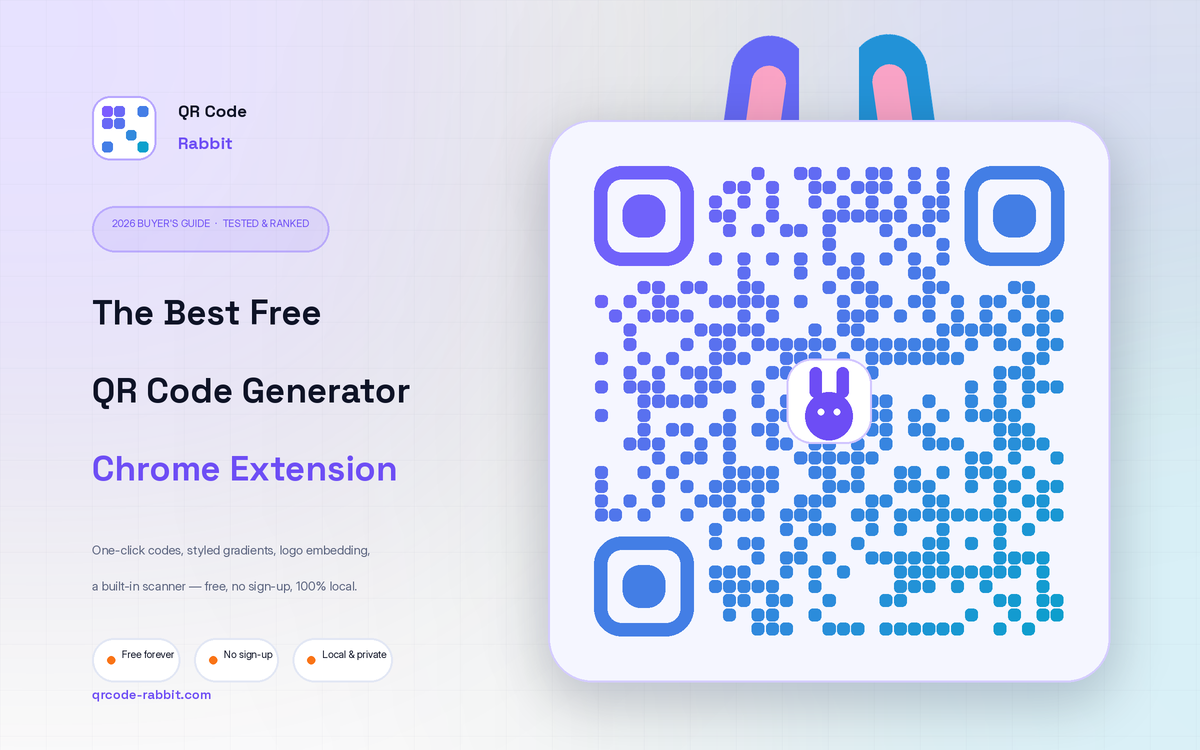
Best Free QR Code Generator Chrome Extension (2026 Guide)
The best free QR code generator Chrome extension in 2026, tested and ranked. Styled gradients, logo embedding, a built-in scanner and PNG/SVG export — no sign-up, 100% local. See why QR Code Rabbit wins.
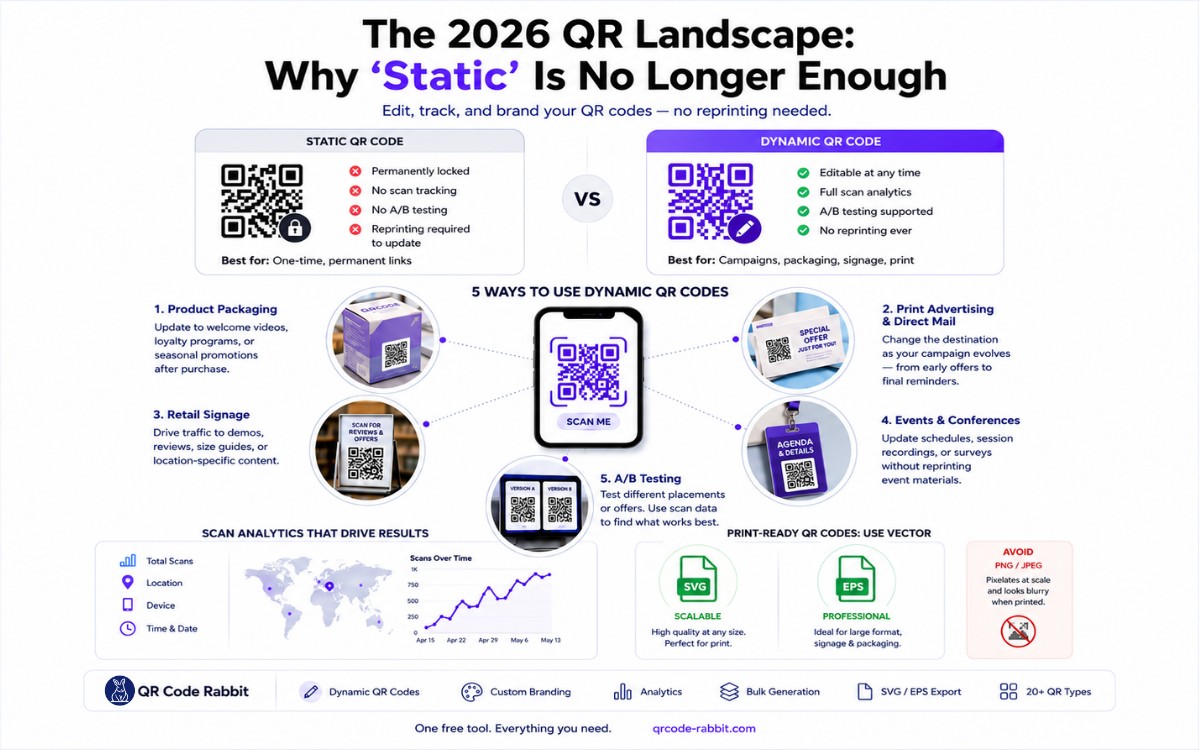
The 2026 QR Landscape: Why 'Static' is No Longer Enough
Learn how to create free dynamic QR codes that you can edit, track, and brand — no reprinting needed. QR Code Rabbit gives you everything in one free tool. Updated April 2026.
What You Will Find on the QR Code Rabbit Blog
We publish practical guides, plain-language explainers, and occasional news about QR adoption and security. The audience is shop owners, marketers, teachers, and developers who use QR codes in real projects — not theory for its own sake.
How-to articles
Step-by-step pieces for menus, badges, packaging, forms, UPI labels, and social profiles. Most include sizing tips and a short testing checklist.
Knowledge base posts
Capacity limits, error correction, static vs dynamic architecture, and how scan tracking works — written so non-developers can follow, with enough depth for integrators.
News and security
Retail and fintech adoption stories, product updates, and reminders about quishing and safe scanning habits as QR usage grows.
Resources and templates
Campaign checklists, design consistency notes, and pointers for teams rolling QR out to many locations or via API.
New posts regularly
Browse by category — how-to, knowledge base, news, resources — or read everything on the main blog index. No paywall, no login required.